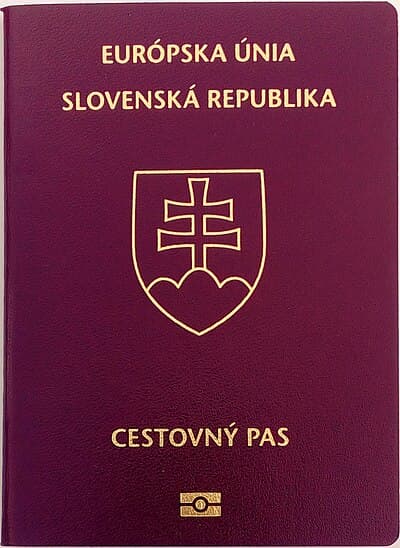
Who qualifies for Slovak citizenship by descent
There are two different things here. Descent proper: a child of a Slovak citizen is Slovak from birth and just needs the birth recorded. The ancestry route: under Section 7(8) of Act No. 40/1993 (added in 2022 as Section 7(8) and moved by Act No. 128/2026), the Ministry of Interior may grant citizenship to someone who has never been Slovak if at least one parent, grandparent or great-grandparent was a Czechoslovak citizen born in the territory of today's Slovakia. You do not need to pass a Slovak language test and you keep your existing citizenship. Until July 2026 applicants also needed a Slovak residence permit; an amendment in force from 15 July 2026 removed that requirement, so applications now go straight to the Ministry of Interior without the Foreigners' Police.
Boarding pass · free tool
No sign-up · Private
Slovakia eligibility checker
Answer a few questions about your Slovakia ancestry. Takes under 2 minutes.
Country
Your answers are processed in your browser — we don’t store them or send them anywhere, including to analytics. The site itself uses analytics and, with your consent, ads. Privacy policy
Slovak citizenship by ancestry: parent route vs the Section 7(8) grant
Slovakia has two quite different things that both get called 'citizenship by descent'. If a parent was a Slovak citizen when you were born, you are Slovak from birth and the task is simply to record it. If your connection is further back, you are not reclaiming anything automatically: you apply for a grant of citizenship under Section 7(8) of Act No. 40/1993 Coll., a route added by the 2022 amendment (until July 2026 it sat in Section 7(2)(j), which is why older guides cite that) for people who have never been Slovak citizens.
That grant is open to anyone whose parent, grandparent or great-grandparent was a Czechoslovak citizen born in the territory of present-day Slovakia. No Slovak language test is required, no period of residence in Slovakia is required, and you keep your existing citizenship.
July 2026: no more residence permit
Until mid-2026 the grant came with one awkward practical step: applicants had to obtain a Slovak residence permit first, which meant dealing with the Foreigners' Police and, for most Americans and Canadians, a trip to Slovakia. An amendment in force from 15 July 2026 removed that requirement for descendants. Applications now go directly to the Ministry of Interior, and the police no longer play any role. Much of the advice online still describes the old residence-permit step — ignore it.
The ancestor test has not changed and is stricter than 'Czechoslovak'. The ancestor must have been born in what is now Slovakia and have been a Czechoslovak citizen. A grandparent born in Bohemia or Moravia points you to the Czech route instead, and the 1993 split (Constitutional Act No. 542/1992) left some families on the Czech side.
The dual-citizenship trap runs in one direction
A descent claimant who already holds another nationality can safely acquire Slovak citizenship. The danger is the reverse: under the 2010 amendment (Act No. 250/2010), a Slovak citizen who then voluntarily acquires a foreign nationality loses Slovak citizenship automatically.
The February 2022 reform (in force April 2022) added exceptions. Slovak citizenship is not lost if the foreign nationality was acquired at birth or by adoption, through marriage to a foreign spouse during the marriage, or after at least five years of registered or permitted residence in that country at the time of acquisition. If you plan to naturalise elsewhere after becoming Slovak, you need to fit one of those exceptions or you will lose the Slovak citizenship you just gained.
Records, cost, timeline
You need birth certificates for each generation, marriage certificates linking them, the ancestor's Slovak birth record, and proof of their Czechoslovak citizenship. Foreign documents need apostilles and certified Slovak translations. Church and civil records for much of Slovakia are on Matricula Online and FamilySearch; the Slovak National Archive and regional archives hold the rest.
The Ministry of Interior has up to 24 months to decide, though many cases are faster. Documents typically cost €400 to €800, The separate 'certificate of Slovak living abroad' recognises Slovak heritage but is not citizenship and is no longer the main path for descendants since the 2022 grant route.
Slovak citizenship by descent requirements
- Parent, grandparent or great-grandparent who was a Czechoslovak citizen born in present-day Slovakia
- No Slovak residence permit needed since 15 July 2026 — apply directly to the Ministry of Interior
- Unbroken documentary lineage from ancestor to applicant
- Applicant has not voluntarily renounced Slovak citizenship
- Dual citizenship is conditional — understand the exceptions (birth, adoption, marriage, or 5+ years foreign residence) before naturalising elsewhere after obtaining Slovak citizenship
- No Slovak language test for the ancestry route
Documents for a Slovak claim
- 1Birth certificates for each generation in the lineage
- 2Marriage certificates linking each generation
- 3Birth certificate of Slovak/Czechoslovak ancestor from Slovakia
- 4Proof of the ancestor's Czechoslovak or Slovak citizenship
- 5Valid passport of the applicant
- 6Death certificates where required
- 7All foreign documents must be apostilled and translated into Slovak
Slovak processing times
The Ministry of Interior has up to 24 months to decide an ancestry-route application, though many are decided sooner. Sourcing Slovak civil-registry and archive records comes first and usually adds several months. The July 2026 changes are expected to shorten the overall process.
Where Slovak claims go wrong
- Ancestor was born in the Czech part of Czechoslovakia, not in present-day Slovakia
- Dual citizenship rules: voluntarily acquiring another nationality after holding Slovak citizenship can cause automatic loss — unless acquired through birth, adoption, marriage, or after 5+ years of registered foreign residence (2022 reform)
- Records from WWII and the communist era may be incomplete or inaccessible
- Name changes and border shifts make identifying the correct ancestor's registered location difficult
- Following pre-July-2026 advice that you need a Slovak residence permit first — that requirement was removed
Official Slovak government sources
Slovak citizenship FAQ
Q1Can I get Slovak citizenship through a great-grandparent?
Yes, if that great-grandparent was a Czechoslovak citizen born in present-day Slovakia. Under Section 7(8) the Ministry of Interior can grant citizenship to descendants up to great-grandchildren, without a language test — and since 15 July 2026 without a Slovak residence permit.
Q2Do I still need a Slovak residence permit?
No. An amendment in force from 15 July 2026 removed the residence-permit requirement for descendants; applications go directly to the Ministry of Interior. Check the Ministry's current instructions on how to submit from abroad.
Q3My grandparent was born in Czechoslovakia — does that qualify me?
Only if they were born in the territory of present-day Slovakia and were a Czechoslovak citizen. A grandparent born in the Czech lands points you to the Czech route instead.
Q4Will I lose Slovak citizenship if I naturalise somewhere else later?
Possibly. Already holding another nationality when you become Slovak is fine, but voluntarily acquiring a new one afterwards causes automatic loss unless an exception applies — birth or adoption, marriage, or at least five years of registered residence in that country (the 2022 exception).
Q5How long does the Ministry take?
The Ministry of Interior's processing deadline for § 7(8) applications is 24 months.
Slovak nationality law
Slovak citizenship is governed by Act No. 40/1993 Coll. on Slovak Citizenship (zákon o štátnom občianstve Slovenskej republiky), as amended. The 2010 amendment (Act No. 250/2010) introduced strict penalties for acquiring a foreign nationality voluntarily — automatic loss of Slovak citizenship. The 1993 split of Czechoslovakia was governed by Constitutional Act No. 542/1992, which assigned citizenship based on registry records.
Dual citizenship in Slovakia
Slovakia permits dual citizenship in several circumstances, but the general rule still applies: a Slovak citizen who voluntarily acquires a foreign nationality loses Slovak citizenship automatically. Slovak citizenship is NOT lost if the foreign nationality was acquired: (1) at birth or by adoption; (2) by acquiring the citizenship of a spouse during the marriage; (3) after at least five years of permitted or registered foreign residence at the time of acquisition — an exception introduced by the February 2022 reform (in force from April 2022). A descent claimant who already holds another nationality can safely gain Slovak citizenship. The risk is in the reverse direction: once you hold Slovak citizenship, subsequently naturalising abroad could cause loss of Slovak citizenship unless the 5-year residency exception applies.
Slovak application costs
Ministry of Interior administrative fee for a grant of citizenship: check the Ministry's current fee schedule. Document costs (Slovak civil registry excerpts, apostilles, certified translations): €400–€800. Slovak National Archive searches: €5–€30 per request. A residence permit is no longer required since 15 July 2026.
Compare across countries: dual citizenship everywhere, citizenship through grandparents and through great-grandparents.