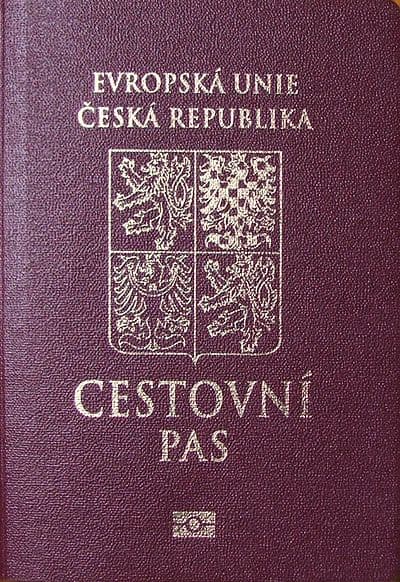
Who qualifies for Czech citizenship by descent
If a parent was a Czech citizen when you were born, you are already Czech and only need to register. If a parent or grandparent was a Czech or Czechoslovak citizen who lost that citizenship by 31 December 2013 — for any reason, including naturalising in the United States or elsewhere — you can acquire Czech citizenship by a simple declaration under Section 31(3) of Act No. 186/2013 (as amended in 2019). It is a legal entitlement: no language test, no residence, and you keep your existing citizenship. The route stops at grandchildren; a proposed great-grandchild extension had not been enacted as of September 2026. People of Czech origin who fall outside it can apply for permanent residence in the Czech Republic.
Boarding pass · free tool
No sign-up · Private
Czech Republic eligibility checker
Answer a few questions about your Czech Republic ancestry. Takes under 2 minutes.
Country
Your answers are processed in your browser — we don’t store them or send them anywhere, including to analytics. The site itself uses analytics and, with your consent, ads. Privacy policy
The declaration route covers most Czech-American families
Since a 2019 amendment, Section 31(3) of the Citizenship Act (No. 186/2013) lets the child or grandchild of a former Czech or Czechoslovak citizen acquire Czech citizenship by declaration, provided that ancestor lost citizenship by 31 December 2013. It does not matter how the citizenship was lost. Naturalising in the United States, Canada or Australia counts, and that is how most Czech emigrants lost it.
It is a legal entitlement rather than a discretionary grant: no language test, no residence, no interview. And because the Czech Republic has allowed dual citizenship since 2014, you keep the citizenship you already hold.
Children of Czech citizens are already Czech
If a parent was a Czech citizen when you were born, you do not need the declaration at all. You are Czech by birth and only need to register the birth with the Czech special registry in Brno, usually through a consulate.
Where the line stops
The declaration reaches children and grandchildren only. A proposal to extend it to great-grandchildren had not become law as of September 2026, whatever some websites say. If your connection is further back, the realistic option is permanent residence for persons of Czech origin, followed in time by naturalisation.
Watch the 1993 split. Czechoslovakia divided on 1 January 1993, and an ancestor who lived on the Slovak side may have become a Slovak citizen. That points you to the Slovak route instead.
Documents, cost, timeline
You need birth and marriage certificates linking you to the ancestor, proof of the ancestor's Czech or Czechoslovak citizenship (a birth record from a Czech registry, a pre-war passport, or a domovský list), and evidence of when they lost it, such as a naturalisation certificate. Foreign documents need apostilles and official Czech translations.
Declarations can be filed at a Czech consulate or a regional office. There is a small administrative fee, and decisions typically take several months.
The declaration, step by step
Section 31 of Act 186/2013 lets former Czech or Czechoslovak citizens — and their children and grandchildren — reacquire or acquire Czech citizenship by a simple declaration. 1. Prove the ancestor's Czechoslovak citizenship (an old Czechoslovak passport, a citizenship certificate, or a domicile record — domovské právo — from the municipal archives). 2. Gather birth and marriage records linking you to the ancestor. 3. Get a criminal record certificate. 4. File the declaration at a Czech embassy or consulate, which forwards it to the Ministry of the Interior. If the declaration is accepted, you receive a certificate of citizenship.
One condition is easy to miss: you can't make the declaration if you're a Slovak citizen on the day you file.
Sources: Consulate General of the Czech Republic, Los Angeles — children and grandchildren of former citizens · Czech MFA — Act 186/2013 on Citizenship (English)
Czech citizenship by descent requirements
- Parent was a Czech citizen at your birth (you are already Czech), OR
- A parent or grandparent was a Czech or Czechoslovak citizen and lost that citizenship by 31 December 2013 — for any reason, including naturalising abroad
- No language test, no residence requirement, dual citizenship allowed
- Great-grandchildren are not covered (proposed extension not enacted as of September 2026)
Documents for a Czech claim
- 1Birth certificates for each generation in the lineage
- 2Marriage certificates linking each generation
- 3Czech/Czechoslovak civil records for the ancestor (birth registration, citizenship records)
- 4Evidence of when the ancestor lost Czech or Czechoslovak citizenship (for example a foreign naturalisation certificate)
- 5Valid passport of the applicant
- 6Death certificates where needed
- 7All foreign documents must be apostilled and officially translated into Czech
Czech processing times
Direct descent cases where a parent was Czech can be resolved in 3-6 months. Declaration cases are more complex and may take 6-18 months depending on the regional office and document availability. Permanent residency applications for persons of Czech origin follow a separate immigration timeline.
Where Czech claims go wrong
- Assuming the declaration only covers involuntary losses — it covers any loss by the end of 2013, including naturalising in the US
- Trying to claim through a great-grandparent — not covered
- An ancestor who became Slovak rather than Czech in 1993
- Missing proof of the ancestor's Czechoslovak citizenship and of when it was lost
- Name spellings that differ between Czech, German and English records
Official Czech government sources
Czech citizenship FAQ
Q1My grandfather became an American citizen. Can I still get Czech citizenship?
Yes, if he was a Czech or Czechoslovak citizen and lost that citizenship by 31 December 2013. The Section 31(3) declaration covers losses for any reason, including naturalising in the US.
Q2Can I claim through a great-grandparent?
Not by declaration. The route covers children and grandchildren only, and the proposed great-grandchild extension had not been enacted as of September 2026. Permanent residence for people of Czech origin is the alternative.
Q3Do I need to speak Czech?
No. The declaration has no language test and no residence requirement.
Q4Will I have to give up my current citizenship?
No. The Czech Republic has permitted dual citizenship since 1 January 2014.
Q5Do I need to speak Czech?
No. The section 31 declaration has no language test and no residence requirement.
Czech nationality law
Czech citizenship is governed by Act No. 186/2013 Coll. on Czech Citizenship (zákon o státním občanství), effective 1 January 2014. Section 31 provides the declaration for former citizens who lost Czech or Czechoslovak citizenship before 2014, and — since the 2019 amendment — for their children and grandchildren. The 1993 division of Czechoslovakia was governed by Constitutional Act No. 542/1992.
Dual citizenship in the Czech Republic
The Czech Republic fully permits dual citizenship since the passage of Act No. 186/2013. Prior to 2014, Czech law generally prohibited dual nationality. If your ancestor lost Czech citizenship before 2014 under the old prohibition, they — and their children and grandchildren — can reacquire it by declaration under Section 31. New Czech citizens are not required to renounce prior nationality, and Czech citizens who naturalise abroad no longer automatically lose Czech citizenship.
Czech application costs
Declaration of citizenship fee: CZK 500 (~€20). Recognition of citizenship at a Czech consulate: free. Document costs (apostilles, certified translations into Czech): €400–€900 depending on number of countries. Attorneys or Czech citizenship specialists: €1,500–€4,000.
Compare across countries: dual citizenship everywhere, citizenship through grandparents and through great-grandparents.