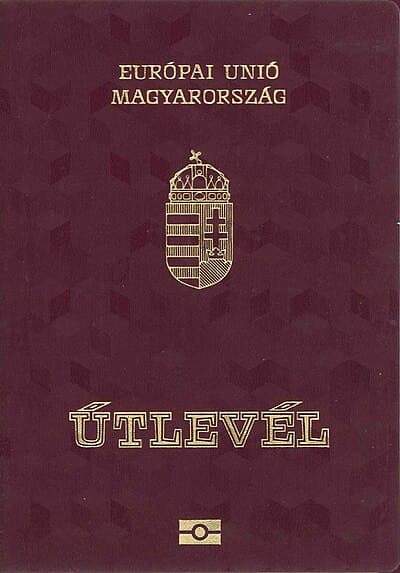
Who qualifies for Hungarian citizenship by descent
Confirming existing citizenship (állampolgársági bizonyítvány): if Hungarian citizenship passed down every generation to you, you may already be Hungarian. The Budapest Government Office decides this from your family's births, marriages, departure dates and any foreign naturalization. It's free and has no language requirement. Declaration (Act LV of 1993, § 5/A): for example a person born before 1 October 1957 to a Hungarian mother and a non-Hungarian father who didn't become Hungarian at birth, or someone released from or stripped of citizenship, can claim citizenship by written declaration. Simplified naturalization (egyszerűsített honosítás, § 4(3)): a new grant for people whose ancestor was a Hungarian citizen or whose Hungarian origin is plausible — no generational limit and no residence in Hungary, but a clean record and a conversation in Hungarian at an intermediate, two-way level are required.
Boarding pass · free tool
No sign-up · Private
Hungary eligibility checker
Answer a few questions about your Hungary ancestry. Takes under 2 minutes.
Country
Your answers are processed in your browser — we don’t store them or send them anywhere, including to analytics. The site itself uses analytics and, with your consent, ads. Privacy policy
Three different routes — and only one needs Hungarian
Hungary has three separate ways in for people with Hungarian roots, and they work very differently. Confirming existing citizenship (an állampolgársági bizonyítvány) is for people who may already be Hungarian through an unbroken line: the Budapest Government Office examines your family's records and, if citizenship passed down to you, certifies it. It's free and has no language requirement.
A declaration covers specific historical situations — most often a person born before 1 October 1957 to a Hungarian mother and a non-Hungarian father who didn't become Hungarian at birth, or someone released from or stripped of citizenship. Those people can claim citizenship by a written declaration (Act LV of 1993, § 5/A). The Act sets no language requirement for it.
Simplified naturalization (egyszerűsített honosítás) is a new grant of citizenship for people whose ancestor was a Hungarian citizen, or whose Hungarian origin is plausible. There's no generational limit and no residence requirement, but you need a clean record under Hungarian law and must hold a conversation in Hungarian with the official who takes your application.
Sources: Budapest Government Office — information sheet on citizenship verification and declarations, July 2026 (PDF, Hungarian) · Act LV of 1993 on Hungarian Citizenship — §§ 4(3), 5, 5/A (official text, Hungarian) · Budapest Government Office — information sheet on simplified naturalization, July 2026 (PDF, Hungarian)
Whether you're already Hungarian depends on facts, not on a yes/no 'unbroken chain'
The authority decides existing citizenship from specific facts: each ancestor's birth and marriage, when they left Hungary, and when and how anyone acquired another citizenship. Those are the facts to gather — not your own judgment about whether the chain is 'unbroken'. For ancestors who left before 1945, the authority advises sending extra evidence of their Hungarian citizenship, such as an old passport, certificate of domicile, or school, military or employment records.
The rules that ended citizenship changed over time. Under the 1879 Citizenship Act, citizenship ended by formal release, 10 years' uninterrupted absence abroad without registering or holding a valid passport (which also affected the wife and minor children), legitimation, or a woman's marriage to a foreigner. Acquiring another country's citizenship is not itself on that list — so don't assume an ancestor's US naturalization automatically broke your line. Later laws differ, and the authority applies whichever was in force at the time.
If you can't establish the facts, that's not a dead end: simplified naturalization doesn't depend on them.
Sources: Budapest Government Office — information sheet on citizenship verification and declarations, July 2026 (PDF, Hungarian) · Act L of 1879 on Hungarian Citizenship — §§ 20, 31–34 (historical text, Hungarian)
Your ancestor and your records
For simplified naturalization you need an ancestor who was a Hungarian citizen, or Hungarian origin you can make plausible. Living in the historical Kingdom of Hungary is evidence of that, not the test itself — records often sit in archives now in Romania, Slovakia, Serbia, Ukraine or Austria. The official guidance accepts state civil records, church or archival certificates that cite volume, page and entry number, and an ancestor's military, employment or school records, plus birth and marriage records for every generation down to you.
If a relative was already naturalized through the same ancestor, you can give their details instead of resubmitting the ancestor's proof.
The language conversation, if you need it
Simplified naturalization is the only one of the three routes with a language check. There's no exam or certificate: the official who receives your application checks your Hungarian in conversation and records the result on the form. The official guidance describes the standard as two-way communication — understanding and expressing yourself — at an intermediate level. Accent, dialect or broken Hungarian isn't a problem in itself, and your Hungarian can be checked again at any stage of the procedure.
In my experience the workable strategy is to prepare the ground you'll actually talk about — where you were born and live, who your Hungarian ancestor was, your family, why you're applying — until you can understand questions about it and answer naturally, rather than memorizing a script. If confirming existing citizenship or a declaration applies to you, you don't need any of this.
Sources: Budapest Government Office — information sheet on simplified naturalization, July 2026 (PDF, Hungarian) · Embassy of Hungary (Bern) — simplified naturalization, in English
Cost and dual citizenship
The procedures themselves are free — the certificate of citizenship and naturalization alike. Your costs are records, certified translations and apostilles or legalization, which commonly run a few hundred euros depending on how many generations and countries are involved.
Hungary doesn't require you to give up your current citizenship. Some other countries take away their own citizenship from people who voluntarily acquire another, so check your own country's rules.
Sources: Budapest Government Office — information sheet on citizenship verification and declarations, July 2026 (PDF, Hungarian) · Budapest Government Office — information sheet on simplified naturalization, July 2026 (PDF, Hungarian)
Hungarian citizenship by descent requirements
- Existing citizenship: an ancestor who was a Hungarian citizen, and no loss of citizenship between them and you — decided by the authority from dates and records
- Existing citizenship and declaration: no language requirement
- Declaration: one of the § 5/A situations, e.g. born before 1 October 1957 to a Hungarian mother and a non-Hungarian father
- Simplified naturalization: an ancestor who was a Hungarian citizen, or plausible Hungarian origin — no generational limit
- Simplified naturalization: intermediate, two-way conversational Hungarian, checked in person by the official
- Simplified naturalization: clean record under Hungarian law and no pending Hungarian criminal case
Documents for a Hungarian claim
- 1Birth and marriage certificates for each generation linking you to your Hungarian ancestor
- 2Proof of the ancestor's Hungarian citizenship or origin: Hungarian civil or church records (citing volume, page and entry number), or their old passport, school, military or employment records
- 3Departure and naturalization dates for ancestors who emigrated (e.g. passenger lists, naturalization certificates) — the authority uses these to decide existing citizenship
- 4Extra proof of Hungarian citizenship if your line left Hungary before 1945
- 5Certified Hungarian translations and apostilles or legalization for foreign documents, as required
- 6Your valid passport or ID, and the official application form for your route
Hungarian processing times
The authority's deadline for a certificate of citizenship is 60 days, not counting time waiting for missing documents. Naturalization takes longer — the author's own simplified naturalization took about ten months after the consular interview. Gathering records from former Hungarian territories now in Romania, Slovakia, Serbia, Ukraine or Austria can add months before you file.
Where Hungarian claims go wrong
- Defaulting to simplified naturalization without checking whether you're already Hungarian or the declaration route applies — both have no language requirement
- Assuming an ancestor's foreign naturalization automatically broke the line — under the 1879 Act it wasn't itself a ground for loss; the authority decides from the dates and the law in force
- Underestimating the conversation for simplified naturalization: it's two-way, at an intermediate level
- Difficulty obtaining records from areas now in Romania, Slovakia, Serbia, Ukraine or Austria
- Name spelling variations in old Hungarian records
- Church records submitted without the volume, page and entry number
Official Hungarian government sources
Hungarian citizenship FAQ
Q1Do I need to speak Hungarian to get citizenship by descent?
Only for simplified naturalization. Confirming existing citizenship has no language requirement, and the Act sets none for the declaration route. Find out whether either of those applies before you start studying.
Q2My great-grandfather emigrated and became a US citizen — is my Hungarian line broken?
Not necessarily. Under the 1879 Act, acquiring another citizenship wasn't itself a ground for losing Hungarian citizenship; long unregistered absence abroad was. What matters is when he left, whether and when he naturalized, and which law applied — the authority examines those facts. Gather his departure and naturalization dates, and remember simplified naturalization is open either way.
Q3Is there a generational limit?
No fixed limit for either confirming existing citizenship or simplified naturalization. In practice, each generation has to be documented.
Q4How long does the process take?
The authority's own deadline for a certificate of citizenship is 60 days, not counting time spent waiting for missing documents. Naturalization takes longer; my own simplified naturalization took about ten months after the consular interview. Collecting records from former Hungarian territories often takes longer than the procedure itself.
Q5Can I keep my current citizenship?
Hungary doesn't require you to give it up. Check whether your other country lets you keep its citizenship when you acquire Hungarian.
Hungarian nationality law
Act LV of 1993 on Hungarian Citizenship: § 4(3) and (3a) (simplified naturalization), § 5 (re-naturalization), § 5/A (declaration). Whether citizenship was lost in the past depends on the law in force at the time — for example, under Act L of 1879 citizenship ended by release, 10 years' unregistered absence abroad, legitimation, or a woman's marriage to a foreigner. Rules on this page were checked against the linked official sources on 5 October 2026.
Dual citizenship in Hungary
Hungary doesn't require you to give up your existing citizenship for any of the three routes. Some other countries remove their own citizenship from people who voluntarily acquire another — check your country's rules.
Hungarian application costs
The procedures themselves are free. Document costs (records, certified translations, apostilles) typically run €300–€700 depending on the number of generations and countries. If you use simplified naturalization, language preparation costs whatever you choose to spend — from free self-study to paid courses or tutors.
Compare across countries: dual citizenship everywhere, citizenship through grandparents and through great-grandparents.
Where to find Hungarian records
How I Got Hungarian Citizenship Through Simplified Naturalization
A first-hand account from Michael, who completed this process himself.
I want to be honest about something up front, because almost every guide I read got it wrong: Hungarian citizenship through ancestry is not a “prove your bloodline and get a passport” process. The route I went through — simplified naturalization — requires two things, not one. You have to document a genuine Hungarian ancestral connection, and you have to demonstrate that you can actually speak Hungarian. That second part is what most people underestimate, and it’s what nearly broke me.
Why I started
I have Hungarian ancestry through my mother’s side, and I wanted to reconnect with that part of my family’s history in a real, permanent way. My case ran through my great-great-grandfather, Anthony Jandl (recorded in older documents as Antonius), born in 1881 in Pomogy — a town that sat inside the Kingdom of Hungary at the time and is today Pamhagen, just across the border in Austria. The line came down as Anthony → Robert → Katherine → my mother → me.
The whole application rests on proving that chain cleanly, generation by generation, back to an ancestor born on what was then Hungarian soil.
The documents were tedious; the names were the trap
Collecting birth, marriage, and death records across four generations was a slog, but the real difficulty wasn’t volume — it was consistency. Old civil and church records don’t care about matching your modern paperwork. The same man shows up as Antonius in one record and Anthony in another, spellings drift, places get renamed, and every one of those small discrepancies is a place the file can stall. A lot of my time went into making sure each generation connected unambiguously to the next, and even after my consular appointment I still had to mail in additional documents to keep the file moving.
The language was the hard part
This is the part I’d tell anyone considering it to take seriously. Hungarian is brutal for an English speaker — the grammar, the word order, the pronunciation, none of it gives you a foothold. I started studying seriously around December 2023.
I made one strategic decision early that I think saved me: I did not try to become fluent. I learned practical citizenship Hungarian — the exact set of things I’d need to say in an interview about myself, my family, and my ancestry, and nothing beyond that. I worked with Hungarian Language Solutions as my main structured support, and supplemented with private tutors I found on italki and Preply.
I drilled a fixed set of answers until I could produce them under pressure instead of trying to improvise and falling apart:
- Minnesotában születtem. — I was born in Minnesota.
- Georgiában élek. — I live in Georgia.
- Az ükapám magyar volt. — My great-great-grandfather was Hungarian.
- Jandl Anthony 1881-ben Pomogyban született. — Anthony Jandl was born in Pomogy in 1881.
- 2023 decembere óta tanulok magyarul. — I’ve been studying Hungarian since December 2023.
The goal was never to sound native. It was to show a genuine, basic command of the language and to communicate clearly enough to get through the process.
The consular day
My appointment was in late 2024, at one of the Hungarian consulate’s periodic U.S. consular days. They reviewed my documents, took my photo and fingerprints, and assessed my Hungarian. This was the live test — the single point where months of preparation either held up or didn’t. I walked out understanding I’d passed the interview portion, which was the biggest risk in the whole thing behind me.
Then you wait
After I sent in the last of the follow-up documents, my file went to Budapest a few weeks later, and the waiting began. This was the most mentally draining stretch — not because anything was happening, but because nothing visibly was. No updates, no way to know if a document fell short or whether they’d call me back with more questions in Hungarian. I kept studying through the silence anyway, because I didn’t want to be caught flat if a follow-up call came.
It took about ten months. The following fall, I got word from the embassy that my honosítási okirat — my naturalization certificate — had arrived. The application had been approved. After that, the final step was taking the oath within a year.
What I’d tell you
Simplified naturalization is genuinely doable, but it is not fake-easy, and anyone selling it that way is doing you a disservice. You need solid documents, real patience for an opaque waiting period, organization, and — the part people skip — actual Hungarian. Strong ancestry paperwork will not save you if you can’t speak at the interview.
The practical approach is what worked: I didn’t learn Hungarian, I learned my Hungarian — who I am, where I’m from, what I do, and why I was applying. If you’re considering this, start the language early and treat it as the centerpiece, not an afterthought.
This is my personal experience, not legal advice. Hungarian citizenship rules and consular procedures change — confirm the current requirements with the Hungarian consulate or an immigration attorney before you begin.