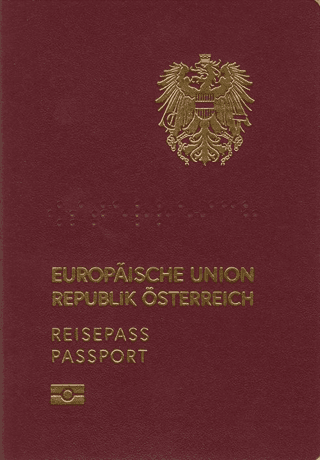
Who qualifies for Austrian citizenship by descent
Standard descent: a child acquires Austrian citizenship at birth if the mother is Austrian, or if the father is Austrian and married to the mother (for children of unmarried Austrian fathers, paternity must be established in time). Citizenship acquired at birth can be held alongside another citizenship acquired at birth. What Austria restricts is acquiring a second nationality later: an Austrian who voluntarily naturalises elsewhere generally loses Austrian citizenship unless a retention permit (Beibehaltungsbewilligung) was granted first, and foreigners naturalising in Austria must normally renounce their other nationality. The §58c route is separate: descendants in direct line of people who were persecuted by the NSDAP or the authorities of the Third Reich, or who fled Austria before 15 May 1955 for fear of such persecution, can acquire citizenship by notification (Anzeige) from abroad, with no generational limit and dual citizenship allowed.
Boarding pass · free tool
No sign-up · Private
Austria eligibility checker
Answer a few questions about your Austria ancestry. Takes under 2 minutes.
Country
Your answers are processed in your browser — we don’t store them or send them anywhere, including to analytics. The site itself uses analytics and, with your consent, ads. Privacy policy
Two routes that work very differently
A child born to an Austrian mother, or to an Austrian father married to the mother, is Austrian at birth under §7 of the Citizenship Act, wherever the birth takes place. If the child also acquires another citizenship at birth — American by being born in the US, for example — both can be held. Austria's famous strictness applies to acquiring a second nationality later: an Austrian who voluntarily naturalises elsewhere generally loses Austrian citizenship unless a retention permit was granted first.
One date matters for mothers: before 1 September 1983, a child born in marriage took Austrian citizenship only from the father. Children of Austrian mothers born before then could claim it by declaration, but that window closed in 1988.
That is why most diaspora chains broke: an emigrant who naturalised abroad lost Austrian citizenship and could not pass it on. §58c exists to repair the cases where emigration was caused by persecution.
§58c: the persecuted-descendants route
Since 1 September 2020, §58c lets people who were persecuted by the NSDAP or the authorities of the Third Reich, or who left Austria before 15 May 1955 for fear of such persecution, and all of their direct descendants, acquire Austrian citizenship by notification. There is no generational limit, no language test, no residence requirement and no need to give up any other citizenship. A further amendment in 2022 refined the provision.
The line must run through the persecuted person. A persecuted great-aunt does not create eligibility for her siblings' descendants.
Evidence and process
You need proof that the ancestor was an Austrian citizen or lived in Austria, evidence of the persecution or of the flight and its circumstances, and civil records linking each generation to you. Useful sources include the Austrian State Archives, the Vienna City and Provincial Archives, the Documentation Centre of Austrian Resistance (DÖW), emigration records and Holocaust-era archives.
Notifications are filed with the Vienna provincial government (MA 35) or through an Austrian embassy or consulate. Fees are low; the real costs are translations, archive research and, often, a genealogist.
Section 58c in practice
Section 58c lets people persecuted by the Nazi regime — or for defending the democratic Republic — who left Austria before 15 May 1955, and all their direct descendants, acquire Austrian citizenship by a simple notification (Anzeige). There's no generation limit, no language test, no residence requirement, and you keep your current citizenship. The procedure is free of charge.
The ancestor must have been an Austrian citizen, or a citizen of a successor state of the Habsburg monarchy who lived in Austria. Typical evidence includes Austrian residence registrations (Meldezettel), emigration papers, and records from the Documentation Centre of Austrian Resistance or Jewish community archives. Applications go to the Vienna provincial government (MA 35), usually through an Austrian embassy.
Sources: Austrian Foreign Ministry — information sheet on § 58c
Section 27 and keeping Austrian citizenship
Outside § 58c, Austria is strict: under § 27 an Austrian who acquires another citizenship by application loses Austrian citizenship unless they first obtained permission to retain it (Beibehaltung). That matters for family lines — a parent who naturalised abroad without permission before you were born wasn't Austrian at your birth, although children born before the loss keep their Austrian citizenship.
Sources: RIS — Austrian Citizenship Act (StbG), current version
Austrian citizenship by descent requirements
- Standard descent: an Austrian mother, or an Austrian father married to the mother, at your birth
- §58c: a direct-line ancestor persecuted by the NSDAP or Third Reich authorities, or who fled Austria before 15 May 1955 for fear of persecution
- §58c: no generational limit, no language test, dual citizenship allowed
- Evidence of the ancestor's Austrian citizenship (or residence in Austria) and of the persecution or flight
- Notification filed with the Vienna authority (MA 35) or an Austrian embassy or consulate
Documents for an Austrian claim
- 1Lineage documents: birth and marriage certificates for each generation from the Austrian ancestor to the applicant
- 2For §58c: proof of persecution (Nazi-era records from Austrian State Archives, emigration records, denaturalization decrees, Yad Vashem testimony, Wiener Stadt- und Landesarchiv records)
- 3Austrian ancestor's birth certificate and citizenship evidence
- 4Proof of the ancestor's residence in Austria (old address records, voter registration, school records)
- 5Apostilles on all foreign documents
- 6Certified German translations of all non-German/Austrian documents
- 7Applicant's valid national passport
Austrian processing times
§58c notifications are handled by the Vienna provincial government (MA 35) or via an Austrian embassy or consulate. Processing commonly takes many months, and finding evidence of the ancestor's persecution or flight is often the slowest step.
Where Austrian claims go wrong
- Assuming Austrian descent always means giving up your passport — that applies to naturalisation, not to citizenship held from birth or to §58c
- Claiming through a persecuted great-aunt or uncle — §58c requires direct-line descent
- Thin evidence of the persecution or the circumstances of flight
- An Austrian parent who lost citizenship by voluntarily naturalising elsewhere before your birth
- Missing records: Austrian, German and emigration archives may all need to be searched
Official Austrian government sources
Austrian citizenship FAQ
Q1Can I keep my US citizenship if I claim Austrian citizenship?
Under §58c, yes. And if you were Austrian at birth through a parent, you can hold that alongside a citizenship acquired at birth. The restriction is on Austrians who later voluntarily acquire another nationality, and on foreigners naturalising in Austria.
Q2What is the §58c route?
A provision of the Citizenship Act for descendants of people persecuted by the Nazi regime, or who fled Austria before 15 May 1955 for fear of persecution. It has no generational limit, needs no language test, and allows dual citizenship.
Q3Does a persecuted great-aunt or uncle qualify me?
No. The line must run directly through the persecuted person.
Q4My Austrian grandfather emigrated in 1910 and became American. Do I qualify?
Usually not through ordinary descent, because naturalising abroad generally cost him Austrian citizenship. §58c only helps where emigration was linked to persecution by the Nazi regime.
Q5Does § 58c cost anything?
No. The notification procedure is free of charge.
Austrian nationality law
Austrian citizenship is governed by the Staatsbürgerschaftsgesetz (StbG) 1985, as amended. Acquisition by descent at birth is in §7. §58c, introduced in 1993, was greatly widened from 1 September 2020 (BGBl. I No. 96/2020) to cover all direct descendants and departures up to 15 May 1955, with a further amendment in 2022 (BGBl. I No. 48/2022).
Dual citizenship in Austria
Citizenship held from birth can be combined with another citizenship held from birth. Austrians who later voluntarily acquire another nationality generally lose Austrian citizenship unless they obtained a retention permit beforehand, and people naturalising in Austria must normally renounce their other nationality. §58c is the major exception: you keep your existing citizenship.
Austrian application costs
Fees for a §58c notification are low; the real costs are document retrieval, certified German translations (often €40–€100 per document), apostilles, archive research, and any professional genealogical help.
Compare across countries: dual citizenship everywhere, citizenship through grandparents and through great-grandparents.