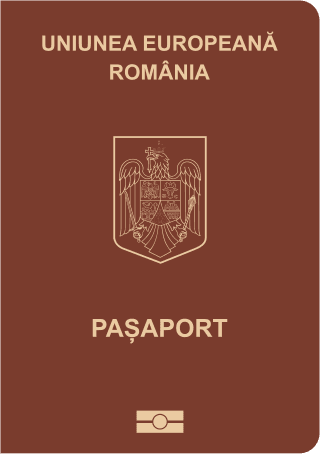
Who qualifies for Romanian citizenship by descent
Two main pathways exist. First, a child born to a Romanian parent is Romanian and only needs the birth transcribed. Second, Law 21/1991 lets descendants reacquire citizenship: Article 11 covers people who lost Romanian citizenship for reasons not attributable to them, or who came from territories that were part of Romania (such as Bessarabia and Northern Bukovina), and their descendants up to the third degree — children, grandchildren and great-grandchildren; Article 10 covers former citizens and their descendants up to the second degree. Neither needs residence in Romania, and dual citizenship is allowed. Since 15 March 2025 (Law 14/2025), applicants under both articles must also prove Romanian at B1 level, with exemptions for people aged 65 or over, minors included in a parent's application, former citizens themselves, and documented medical conditions.
Boarding pass · free tool
No sign-up · Private
Romania eligibility checker
Answer a few questions about your Romania ancestry. Takes under 2 minutes.
Country
Your answers are processed in your browser — we don’t store them or send them anywhere, including to analytics. The site itself uses analytics and, with your consent, ads. Privacy policy
Article 11: the diaspora route, now with a language test
Article 11 of Law 21/1991 lets people reacquire Romanian citizenship if they, or an ancestor, lost it for reasons not attributable to them, or if they come from territories that were part of Romania before 1940, such as Bessarabia and Northern Bukovina. It reaches descendants to the third degree: children, grandchildren and great-grandchildren. You do not have to live in Romania, and you keep your current citizenship.
The big change is language. Law 14/2025, in force since 15 March 2025, requires applicants under Articles 10 and 11 to prove Romanian at B1 level. Since March 2026 the B1 certificate, or proof of at least three years of schooling in Romanian, must be included with the file or it is rejected. People aged 65 or over, minors on a parent's application, former citizens reacquiring their own citizenship, and people with a documented medical condition are exempt.
Article 10 and the parent route
Article 10 covers people who were themselves Romanian citizens, and their descendants to the second degree, who lost citizenship in other circumstances. A child born to a Romanian parent is simply Romanian and needs only the foreign birth transcribed into the Romanian civil register.
Documents and the oath
You need birth and marriage records linking each generation to the Romanian ancestor, proof of the ancestor's Romanian citizenship or birth in a former Romanian territory, a criminal record certificate, and the B1 language certificate. Foreign documents need apostilles and certified Romanian translations.
Applications go to the National Citizenship Authority (ANC). Approval is followed by an oath of allegiance, after which you can apply for a Romanian birth certificate and passport. Processing commonly takes more than a year.
Who was 'Romanian' before 1918 — the trap for Transylvanian and Bukovinian families
Transylvania, Banat, Bukovina and Bessarabia joined Romania only in 1918–1920. A great-grandparent who emigrated from those regions before then was an Austro-Hungarian or Russian subject, not a Romanian citizen — and couldn't lose Romanian citizenship they never had. For those families, Article 11 usually works only through an ancestor who was in Romania after union, or who was born in Bessarabia or Northern Bukovina and lost citizenship with the 1940 cession.
Step by step
1. Gather the ancestor's Romanian birth or marriage record — county branches of the National Archives and parish registers are the main sources. 2. Get your own and each intermediate generation's birth and marriage certificates, apostilled and translated into Romanian. 3. Obtain a B1 Romanian certificate (unless exempt). 4. File with the National Citizenship Authority (ANC) in Bucharest or at a Romanian consulate. 5. After approval, take the oath of allegiance, then transcribe your birth certificate and apply for a passport.
Sources: National Citizenship Authority (ANC) · Law 21/1991 on Romanian citizenship (legislatie.just.ro)
Romanian citizenship by descent requirements
- Parent route: a parent was Romanian when you were born
- Article 11: an ancestor up to great-grandparent who lost Romanian citizenship involuntarily, or came from a former Romanian territory
- Article 10: a former-citizen parent or grandparent
- B1 Romanian language certificate, filed with the application (since 15 March 2025, with limited exemptions)
- Oath of allegiance once approved
Documents for a Romanian claim
- 1Applicant's birth certificate and those of parents, grandparents, and any further ancestors required
- 2Marriage certificates for each couple in the chain
- 3Proof that the ancestor held Romanian citizenship (Romanian birth certificate, old identity card, pre-1989 passport, or civil registry extract)
- 4For Article 11 cases: evidence of involuntary loss of citizenship (denaturalization decree, emigration records, historical testimony)
- 5Apostilles on all foreign documents
- 6Certified Romanian translations of all non-Romanian documents by a court-sworn translator
- 7Applicant's valid national passport and ID
- 8ANC standard declaration of voluntary assumption of obligations
Romanian processing times
ANC officially targets 12 months for processing but current backlogs mean 18–36 months is typical. Article 11 repatriation cases involving historical evidentiary gaps can take 3–5 years. Document gathering from Romanian civil registries and Communist-era state archives adds 3–12 months before submission. Romania is processing extremely high application volumes, particularly from Moldova and Ukraine.
Where Romanian claims go wrong
- Voluntary loss: if an ancestor renounced Romanian citizenship, only their children and grandchildren can use Article 10 — great-grandchildren cannot
- Moldovan archive confusion: Romanian and Moldovan civil registries share overlapping records from the 1940–1944 Bessarabia period — locating the correct extracts requires specific archive knowledge
- Pre-1989 record destruction: some Communist-era records were deliberately destroyed; secondary evidence such as church records and testimony may be required
- Translation requirements: translations must be by certified Romanian court-sworn translators; standard bilingual translations are rejected by the ANC
- Article 11 scope: it covers involuntary loss (territorial changes, being stripped of citizenship) and reaches great-grandchildren; voluntary loss is covered only by Article 10, which stops at grandchildren
Official Romanian government sources
Romanian citizenship FAQ
Q1Do I need to speak Romanian?
Yes, for most applicants since 15 March 2025: a B1 certificate is required for Article 10 and 11 applications. Exemptions cover people aged 65 or over, minors on a parent's application, former citizens themselves, and documented medical conditions.
Q2How far back can I claim?
Under Article 11, up to great-grandchildren of a person who lost Romanian citizenship involuntarily or came from a former Romanian territory. Article 10 reaches grandchildren.
Q3Do I have to live in Romania?
No. Neither Article 10 nor Article 11 requires residence, and Romania allows dual citizenship.
Q4My great-grandfather left Transylvania in 1910. Do I qualify?
Probably not through him: before 1918 Transylvania was part of Austria-Hungary, so he wasn't a Romanian citizen. Look for an ancestor who was in Romania after 1918.
Q5Is there an oath?
Yes. After approval you take an oath of allegiance before getting your Romanian documents.
Romanian nationality law
Romanian citizenship is governed by Law 21/1991 on Romanian Citizenship (as amended). Article 5 covers acquisition by descent (jus sanguinis). Article 10 covers reacquisition by former citizens. Article 11 is the critical provision allowing descendants of involuntarily denationalized persons to reclaim citizenship. The law has been amended multiple times, most significantly in 1999, 2003, 2010, and 2018, each time expanding the Article 11 route and clarifying eligibility.
Dual citizenship in Romania
Romania fully permits dual and multiple citizenship. Romanian citizens who acquire foreign nationality do not lose their Romanian citizenship, and foreign nationals who reacquire Romanian nationality under the CBD or Article 11 routes are not required to renounce their other citizenship. This policy was deliberately designed to serve Romania's large diaspora (estimated 5–6 million abroad) and the substantial population of ethnic Romanians in Moldova.
Romanian application costs
ANC application fee: approximately RON 300–500 (€60–€100). Romanian civil registry extracts: €5–€20 per document. Archive research at DANIC (National Central Historical Archives): €10–€30 per hour. Apostilles: €10–€40 per document. Certified Romanian translations: €40–€80 per document. Total for a typical 2–3 generation claim: €400–€1,200.
Compare across countries: dual citizenship everywhere, citizenship through grandparents and through great-grandparents.