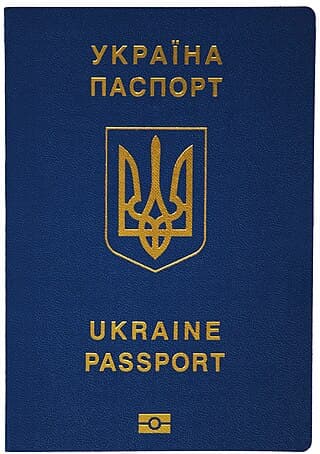
Who qualifies for Ukrainian citizenship by descent
Ukrainian citizenship passes automatically to children of Ukrainian citizens. Further back, Article 8 of the Citizenship Law offers a territorial-origin route: if you, a parent, grandparent, great-grandparent or sibling was born or permanently lived before 24 August 1991 on the territory of today's Ukraine, you can naturalise without the usual five-year residence requirement, though since January 2026 you must pass exams on the Constitution, Ukrainian history and the Ukrainian language. That is a naturalisation application, not automatic descent. Under Law No. 4502-IX (in force since 16 January 2026), citizens of approved countries — initially Canada, Germany, Poland, the United States and the Czech Republic, with more added in May 2026 — no longer have to renounce their existing nationality. Check the current list for your country before relying on dual citizenship.
Boarding pass · free tool
No sign-up · Private
Ukraine eligibility checker
Answer a few questions about your Ukraine ancestry. Takes under 2 minutes.
Country
Your answers are processed in your browser — we don’t store them or send them anywhere, including to analytics. The site itself uses analytics and, with your consent, ads. Privacy policy
The 2026 dual-citizenship law only covers countries on an approved list
Ukraine banned dual citizenship outright for its entire post-Soviet history until Law No. 4502-IX took effect on January 16, 2026. That's a genuine milestone, but it's not the blanket legalization a lot of headlines made it sound like. The law works off an approved list of countries set by Cabinet decision, and at launch (Cabinet Decision No. 1412, November 5, 2025) that list covered Canada, Germany, Poland, the United States, and Czechia; it was extended to 33 countries in May 2026 — but still not the whole Ukrainian diaspora. The list was expanded in May 2026, so check the current version for your country.
If your current nationality isn't on the approved list yet, you're still in the old regime: acquiring Ukrainian citizenship would technically require confirming you don't hold — or are willing to give up — your existing one. The list is expected to expand, so the practical move is to check its current state at a Ukrainian consulate or the State Migration Service before assuming the reform applies to your specific passport. Russian citizenship is explicitly and permanently excluded regardless of any future expansion.
Two different pathways get confused constantly
Descent from a Ukrainian-citizen parent is automatic — you already hold Ukrainian citizenship if a parent held it at your birth, and what you're really doing is getting it formally recognized and documented, not applying for something new. That's a paperwork exercise: birth certificate, parent's proof of citizenship, apostilles, translations.
The territorial origin pathway is different and is not automatic. It's a facilitated naturalization under Article 8 for people who — or whose parent, grandparent, great-grandparent or sibling — was born or permanently lived on today's Ukrainian territory before 24 August 1991, with the usual five-year residence requirement waived. Since January 2026 applicants must pass exams on the Constitution, the history of Ukraine and the Ukrainian language. It's a real application with its own processing timeline, not a confirmation of citizenship you already hold. People with a Ukrainian-born grandparent often assume they're in the same position as someone with a Ukrainian-citizen parent — they're not, and the evidence bar is different.
Wartime record access is the real bottleneck, not the law
Even with the citizenship rules sorted out, the practical constraint since 2022 has been getting documents at all. Civil records in Donetsk, Luhansk, Zaporizhzhia, Kherson, and Crimea may be inaccessible, and pre-1991 Soviet-era archives for some of these regions were historically held in facilities now outside Ukrainian government control. There are document-reconstruction procedures for exactly this situation, but they add months.
Consular capacity is the other constraint: Ukrainian consulates worldwide have been under sustained pressure since the full-scale invasion, and processing times you find quoted in older guides are frequently optimistic. Build in slack, and expect the timeline to depend heavily on which consulate you're filing through.
Ukrainian citizenship by descent requirements
- At least one parent is or was a Ukrainian citizen
- For the territorial-origin route (Article 8): you, a parent, grandparent, great-grandparent or sibling was born or permanently lived on today's Ukrainian territory before 24 August 1991
- Dual citizenship permitted since January 16, 2026 for nationals of approved countries — no renunciation of existing nationality required
- Application at the State Migration Service of Ukraine or a Ukrainian consulate abroad
- Note: the approved-country list is new and expanding — confirm your nationality is currently covered before applying
Documents for a Ukrainian claim
- 1Applicant's birth certificate showing at least one Ukrainian parent
- 2Ukrainian parent's proof of Ukrainian citizenship (Ukrainian passport or internal passport)
- 3For territorial origin pathway: evidence of birth or permanent residency in Ukrainian territory before 1991 (Soviet-era internal passport, birth certificate, migration records)
- 4Marriage certificates as applicable
- 5Apostilles on all foreign documents
- 6Certified Ukrainian translations of all documents not in Ukrainian
- 7Applicant's current valid national passport
- 8Certificate of no criminal conviction from the applicant's country of residence
Ukrainian processing times
Standard descent registration at a consulate: 6–18 months (currently longer due to wartime consular disruptions and staffing constraints). Territorial origin facilitated naturalization: 12–24 months after submission. Ukrainian consular services worldwide have significant backlogs since 2022.
Where Ukrainian claims go wrong
- Historical dual-citizenship prohibition: before Law No. 4502-IX took effect on January 16, 2026, Ukrainians who acquired foreign citizenship automatically lost Ukrainian citizenship; check whether your specific circumstances, and your other nationality, fall under the new rules — the approved-country list is not universal
- Wartime record access: Ukrainian civil records in conflict-affected regions (Donetsk, Luhansk, Zaporizhzhia, Kherson, Crimea) may be inaccessible or destroyed; document reconstruction procedures exist but are complex
- Soviet-era archive access: pre-1991 civil records for some Ukrainian territories may be held in archives controlled by Russia (particularly for Crimea); access has been severely curtailed since 2014 and 2022
- Consular backlogs: since Russia's full-scale invasion in February 2022, Ukrainian consulates worldwide are under enormous pressure — expect processing times well beyond normal estimates
Official Ukrainian government sources
Ukrainian citizenship FAQ
Q1Does the new Ukrainian dual-citizenship law apply to me?
Only if you currently hold the citizenship of one of the countries on Ukraine's approved list under Law No. 4502-IX — it started with Canada, Germany, Poland, the United States and Czechia in January 2026 and was extended to 33 countries in May 2026. If your nationality isn't yet approved, the older single-citizenship rules still apply to your case — check the current list before you rely on this.
Q2My grandmother was born in Ukraine but my mother wasn't a Ukrainian citizen — do I qualify?
Not through automatic descent, which requires a parent who held Ukrainian citizenship at your birth. You may instead qualify through the territorial-origin facilitated naturalization pathway, available to people whose parent or grandparent was born or permanently resided in Ukraine before 1991 — but that's a real application, not a confirmation of citizenship you already hold.
Q3Can Russian citizens use the new dual-citizenship law?
No. Russian citizenship is explicitly excluded from Ukraine's multiple-citizenship framework under Law No. 4502-IX, regardless of any future expansion of the approved-country list.
Q4Why is my Ukrainian citizenship application taking so long?
Wartime disruption is the main driver. Civil records in Russian-occupied or conflict-affected regions may be inaccessible, and Ukrainian consulates worldwide have faced sustained demand since 2022. Realistic timelines run 6–24 months depending on the pathway and which consulate is handling your case — longer than pre-2022 estimates you may find elsewhere.
Q5Do I lose my other citizenship if I claim Ukrainian citizenship?
Only if your current nationality isn't yet on Ukraine's approved dual-citizenship list. If it is (the list covers 33 countries since May 2026, including the US, Canada, Germany, Poland and Czechia), you keep both. If it isn't, the pre-2026 single-citizenship framework still applies to your case until the list is expanded.
Ukrainian nationality law
Ukrainian citizenship is governed by the Law of Ukraine on Ukrainian Citizenship (Law No. 2235-III of 2001, as amended). Law No. 4502-IX, in force since January 16, 2026, introduced the institution of multiple citizenship into Ukrainian law for the first time, following Cabinet Decision No. 1412 (November 5, 2025) naming the initial approved countries. Prior to this reform, Article 19 of the 2001 law provided that acquiring foreign citizenship meant automatic loss of Ukrainian citizenship. The territorial origin pathway is in Articles 9 and 10 of the law.
Dual citizenship in Ukraine
Since January 16, 2026, Ukraine recognizes multiple citizenship for nationals of specific approved countries under Law No. 4502-IX — it started with Canada, Germany, Poland, the United States and Czechia and was extended to 33 countries by Cabinet Resolution No. 589 of 8 May 2026. Russian citizenship is explicitly excluded. Nationals of an approved country can acquire Ukrainian citizenship without renouncing their existing nationality, and Ukrainians who hold one of those nationalities no longer automatically lose Ukrainian citizenship. This is a historic but partial change — Ukraine was one of the last major European countries to prohibit dual citizenship outright, and the reform, driven by wartime diaspora engagement, does not yet cover every nationality. Confirm the current approved-country list before assuming it applies to you.
Ukrainian application costs
Citizenship registration at the State Migration Service: approximately free to UAH 1,000 (approx. €25). Consular fees abroad: variable by country, typically €50–€150. Apostilles: €10–€40 per document. Certified Ukrainian translations: €40–€80 per document. Total: approximately €200–€600 for a standard descent claim.
Compare across countries: dual citizenship everywhere, citizenship through grandparents and through great-grandparents.