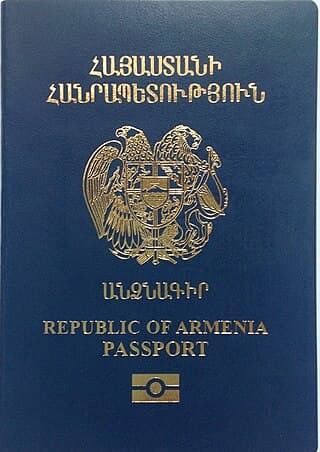
Who qualifies for Armenian citizenship by descent
Armenian citizenship by descent is available to any person born to an Armenian citizen parent. Ethnic Armenians without a direct citizen parent line may apply under special provisions. The diaspora pathway allows ethnic Armenians who were never citizens to reclaim ancestral citizenship.
Boarding pass · free tool
No sign-up · Private
Armenia eligibility checker
Answer a few questions about your Armenia ancestry. Takes under 2 minutes.
Country
Your answers are processed in your browser — we don’t store them or send them anywhere, including to analytics. The site itself uses analytics and, with your consent, ads. Privacy policy
The ethnic-Armenian route is unusually generous — and may not stay that way
Article 13 of Armenia's citizenship law gives simplified naturalisation to anyone who can prove descent from an ethnic Armenian ancestor, with no generational limit, no language test, no residency requirement, and no constitutional-knowledge exam. That combination — especially skipping residency entirely — is rare even among diaspora-friendly countries, most of which require at least some connection through language, ancestry documentation depth, or time spent in-country.
That generosity is currently under review. On 8 September 2026, Armenia's Interior Ministry published draft laws for public discussion that would require ethnic Armenians to have two calendar years of lawful residence and at least 366 days of physical presence in Armenia before naturalising, from 1 January 2028 — a fundamental change to the current no-residency rule. It has not been enacted, and proposals like this can stall or get watered down, but anyone relying on the current no-residency route should treat this as a real reason not to delay an application that's otherwise ready to file.
Applications now go through a new online portal
Since 1 January 2026, Armenia processes citizenship applications exclusively through a unified electronic portal, mcs-citizenship.am, run by the Migration and Citizenship Service. If you're working from an older guide that describes filing in person at OVIR or through paper forms at an embassy, check whether that process has moved online before you follow it — procedures built around a brand-new digital system tend to change faster than the underlying law does.
The genocide-descendant pathway sits alongside the general ethnic-Armenian route rather than replacing it — you don't need to prove your family's specific Genocide history to qualify under Article 13, only Armenian ethnic descent generally. The Genocide-specific framing matters mainly for people whose only surviving records are pre-1915 and may be held in Ottoman-era or Turkish archives rather than Armenian ones.
The hardest part is usually evidencing 'Armenian' when documents don't say so
Because the ethnic route doesn't require a citizen ancestor, the practical work shifts to proving identity rather than proving citizenship: church records from the Armenian Apostolic Church, family naming patterns, community and organizational records, or genealogical documentation showing Armenian origin even where old civil records used Ottoman, Russian, or Soviet administrative categories rather than "Armenian" as a formal designation.
Name transliteration causes real friction here too — Armenian surnames were rendered inconsistently across Ottoman, Russian, French, and English record-keeping systems for the same family over a few generations, and reviewers need that chain made explicit rather than assumed.
Armenian citizenship by descent requirements
- At least one Armenian citizen parent (birth-right descent)
- Ethnic Armenian descent route available for diaspora and Genocide descendants
- Application through the Migration and Citizenship Service's online portal (mcs-citizenship.am, mandatory since 1 January 2026)
- No renunciation of existing citizenship — dual citizenship explicitly permitted
- Ethnic Armenian route: no residence or Armenian language requirement
Documents for an Armenian claim
- 1Applicant's birth certificate (apostilled and translated into Armenian)
- 2Parent's Armenian passport or birth certificate confirming Armenian citizenship
- 3Marriage certificates linking family members across generations
- 4For diaspora/ethnic route: evidence of Armenian descent, family history, church records
- 5For Genocide descendants: any documentary proof of pre-1915 Armenian origin
- 6Completed application form and valid passport
Armenian processing times
Standard descent applications are typically processed within 3–6 months by the Passport and Visa Department. The ethnic/diaspora pathway can take 6–18 months due to additional review.
Where Armenian claims go wrong
- Pre-1915 records may be lost or held in Turkish or Ottoman archives — genealogical research is complex
- The diaspora ethnic route requires demonstrating Armenian identity, which can be subjective
- Names may have been changed or transliterated differently across generations
- Some applicants confuse the ethnic pathway with standard CBD — they have different procedures
Official Armenian government sources
Armenian citizenship FAQ
Q1Do I need an Armenian citizen ancestor, or is ethnic descent enough?
Ethnic descent is enough under Article 13 of Armenia's citizenship law — you don't need to prove any ancestor formally held Armenian citizenship, only that you descend from an ethnic Armenian. There's no generational limit, no language test, and currently no residency requirement.
Q2Is Armenia about to require diaspora applicants to live in Armenia first?
A change like that has been proposed but not enacted. On 8 September 2026 Armenia's Interior Ministry published draft laws for public discussion that would require two years' lawful residence and 366 days' presence in Armenia for ethnic-Armenian naturalisation, from 1 January 2028. It could change, stall, or pass in a different form — if you're eligible under the current no-residency rules, that uncertainty is a reason to apply sooner rather than later.
Q3Where do I actually file my Armenian citizenship application now?
Since 1 January 2026, applications go through Armenia's unified electronic portal, mcs-citizenship.am, run by the Migration and Citizenship Service, rather than the older in-person or embassy-paperwork processes described in some older guides.
Q4My family's records are from before 1915 and may be in Turkish archives — can I still qualify?
Yes. Armenia has a dedicated pathway acknowledging descendants of Armenian Genocide survivors, but you don't need Genocide-specific documentation to qualify — general evidence of ethnic Armenian descent under Article 13 is sufficient. Church records, family history, and community documentation can substitute where formal pre-1915 civil records are unavailable.
Q5Will I have to give up my current citizenship to become Armenian?
No. Armenia fully permits dual and multiple citizenship, and foreign nationals acquiring Armenian citizenship are not required to renounce their existing nationality unless their own country's law forces the choice.
Armenian nationality law
Law on Citizenship of the Republic of Armenia (1995), as amended. Article 13 exempts persons of Armenian origin from the residence, language and Constitution requirements for naturalisation.
Dual citizenship in Armenia
Armenia fully permits dual and multiple citizenship. No renunciation of other citizenships required.
Armenian application costs
State fees are minimal — AMD 3,000–10,000 (approx. €7–€25). Professional translation and legal support typically costs €300–€600.
Compare across countries: dual citizenship everywhere, citizenship through grandparents and through great-grandparents.