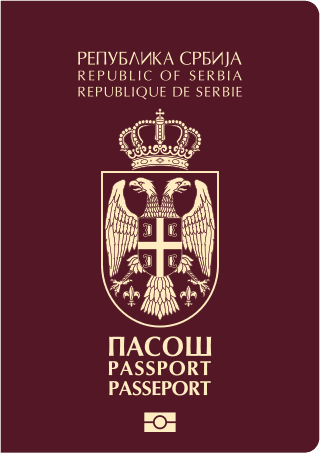
Who qualifies for Serbian citizenship by descent
A child born to at least one Serbian citizen parent automatically acquires Serbian citizenship at birth, regardless of where the birth occurs. Beyond direct parentage, Article 18 lets any descendant of a Serbian emigrant apply for citizenship on turning 18 by declaring they consider Serbia their country — with no generational limit written into the law. Article 23 goes further still: it covers people of Serbian ethnic origin abroad, over 18, who declare Serbia their country, without requiring proof of a citizen ancestor at all — cultural, religious, or community evidence of Serbian identity can support the claim. Dual citizenship is fully permitted, and Serbia has no restriction on holding multiple nationalities.
Boarding pass · free tool
No sign-up · Private
Serbia eligibility checker
Answer a few questions about your Serbia ancestry. Takes under 2 minutes.
Country
Your answers are processed in your browser — we don’t store them or send them anywhere, including to analytics. The site itself uses analytics and, with your consent, ads. Privacy policy
Most guides only mention the narrowest route
If you search "Serbian citizenship by descent," most results describe only one path: a parent who was a Serbian citizen at your birth. That's real, but it's the most restrictive of three separate routes in Serbian law, and it's not the one most diaspora members with a Serbian grandparent or great-grandparent actually need.
Article 18 covers emigrants and their descendants with no generational cut-off written into the law — if an ancestor anywhere in your line left Serbia intending to live abroad permanently, you may qualify regardless of how many generations back that was. You apply on turning 18 by submitting a written statement that you consider Serbia your country; there's no citizenship test buried in that requirement, it's a declaration, not an exam.
You don't need a citizen ancestor at all under Article 23
This is the route almost nobody mentions, and it's the most generous one on the books: Article 23 lets a person of Serbian ethnic origin abroad acquire citizenship without having to prove any ancestor held Serbian citizenship. What you need instead is evidence of Serbian identity — baptism in a Serbian Orthodox church, family language history, community or cultural association records, or similar proof of Serbian ethnic and cultural belonging.
This matters for people whose Serbian ancestors lived in a region that changed hands or borders repeatedly — Vojvodina, parts of Bosnia, or diaspora communities that formed before Serbia existed in its current borders — where documenting formal Serbian citizenship in the historical record is genuinely difficult, but documenting Serbian ethnic identity is not.
Records get complicated for pre-1991 families
For ancestors who lived through the Yugoslav era, civil records may sit in archives now controlled by Bosnia, Croatia, or North Macedonia rather than Serbia, depending on exactly where the family lived. And because Serbian is officially written in Cyrillic, older records may use a script your other family documents don't match — reviewers need the Cyrillic-to-Latin transliteration made explicit, not assumed.
None of the three routes require you to speak Serbian, live in Serbia, or give up your existing citizenship, and Ministry of Interior processing for a complete file typically runs around six months — the slow part is almost always assembling the historical evidence beforehand, not the government's review of it.
Serbian citizenship by descent requirements
- At least one parent is or was a Serbian citizen (direct descent), OR a documented ancestor emigrated from Serbia (Article 18, no generational limit), OR you can evidence Serbian ethnic/cultural origin without a citizen ancestor (Article 23)
- Applicant is 18 or older with full legal capacity, and files a written statement declaring Serbia their country (Articles 18 and 23 routes)
- Application at the Ministry of Interior of Serbia or a Serbian consulate abroad
- Dual citizenship fully permitted — no renunciation required
- No language test or residency requirement for descent, emigrant-descendant, or ethnic-origin claims
Documents for a Serbian claim
- 1Applicant's birth certificate showing at least one Serbian parent
- 2Serbian parent's proof of Serbian citizenship (Serbian passport or identity card)
- 3Marriage certificate if applicable
- 4For under-23 claims: proof of age and documented parentage
- 5Apostilles on all foreign documents
- 6Certified Serbian translations of all non-Serbian documents
- 7Applicant's current valid national passport
Serbian processing times
Citizenship registration at a Serbian consulate or Ministry of Interior: 3–12 months typically. Document gathering from Serbian civil registry archives adds 2–4 months. Serbian naturalization (for those without descent): 3 years of continuous residency.
Where Serbian claims go wrong
- Age-23 window for foreign-born descendants: some descent registrations specifically require filing before age 23; confirm the applicable rule with the Serbian consulate for your specific circumstances
- Former-Yugoslav archive complexity: Serbian civil registry records may be intertwined with records from Bosnia, Croatia, and North Macedonia for families from those areas before 1991 dissolution
- EU candidate status uncertainty: Serbia has been an EU candidate since 2012 but accession timeline remains uncertain — do not rely on a Serbian passport providing EU rights imminently
- Name transliteration: Serbian uses Cyrillic script officially; name records may differ between Cyrillic and Latin representations, which can complicate document matching
Official Serbian government sources
Serbian citizenship FAQ
Q1My great-grandfather emigrated from Serbia — can I still claim citizenship even though it's been three generations?
Likely yes, through Article 18, which covers emigrants and their descendants with no generational limit written into the law. You'd apply on turning 18 by submitting a written statement declaring Serbia your country, alongside documented lineage back to the emigrant ancestor.
Q2I have Serbian heritage but can't prove any ancestor held Serbian citizenship — am I out of options?
Not necessarily. Article 23 allows people of Serbian ethnic origin to acquire citizenship without proving a citizen ancestor at all, using evidence like Serbian Orthodox baptism records, family language history, or community and cultural association records instead.
Q3Do I need to speak Serbian or live in Serbia to qualify?
No, for any of the three routes — direct descent, Article 18 emigrant-descendant, or Article 23 ethnic origin. None require residency, a language test, or renouncing your current citizenship.
Q4How long does Serbian citizenship by descent take?
Ministry of Interior processing for a complete application typically takes around six months. The variable part is usually how long it takes to gather civil records, especially for families whose documents sit in archives now controlled by Bosnia, Croatia, or North Macedonia due to Yugoslav-era border and administrative changes.
Q5Will a Serbian passport give me EU citizenship?
Not currently. Serbia is an EU candidate country with ongoing accession negotiations, but membership is not imminent and shouldn't be assumed. A Serbian passport today gives visa-free access to a meaningful list of countries but not EU freedom-of-movement rights.
Serbian nationality law
Serbian citizenship is governed by the Zakon o državljanstvu Republike Srbije (Law on Citizenship of the Republic of Serbia) of 2004, as amended. Articles 7–9 cover citizenship by origin for children of Serbian citizens, Article 18 emigrants and their descendants, and Article 23 members of the Serbian people abroad. The law permits dual citizenship explicitly and has no renunciation requirements for diaspora claims.
Dual citizenship in Serbia
Serbia fully permits dual and multiple citizenship. Serbian citizens who acquire foreign nationality do not lose their Serbian citizenship, and foreign nationals who acquire Serbian citizenship by descent are not required to renounce their existing nationality. This permissive policy reflects Serbia's interest in maintaining ties with its large overseas diaspora.
Serbian application costs
Ministry of Interior application fee: approximately RSD 500–2,000 (approx. €4–€17). Consular processing fees: variable, typically €50–€150. Serbian civil registry extracts: €5–€20 per document. Apostilles: €10–€40 per document. Certified Serbian translations: €40–€80 per document. Total: approximately €150–€600.
Compare across countries: dual citizenship everywhere, citizenship through grandparents and through great-grandparents.