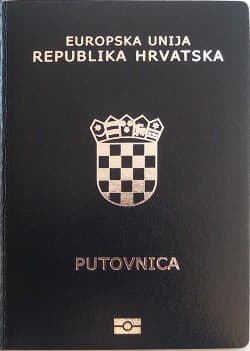
Who qualifies for Croatian citizenship by descent
Under Article 11 of the Croatian Citizenship Act (Zakon o hrvatskom državljanstvu), as amended from 1 January 2020, descendants of a Croatian emigrant — someone who left Croatian territory before 8 October 1991 intending to live abroad — can claim citizenship regardless of how many generations have passed. Because the territory belonged to Austria-Hungary or Yugoslavia when most emigrants left, you also have to show the emigrant belonged to the Croatian people. Croatian origin is established through the ancestor's Croatian birth records, Yugoslav-era identity documents, church baptism records, or emigration records showing departure from Croatian historical territory. Dual citizenship is fully permitted, so no renunciation of existing nationality is required.
Boarding pass · free tool
No sign-up · Private
Croatia eligibility checker
Answer a few questions about your Croatia ancestry. Takes under 2 minutes.
Country
Your answers are processed in your browser — we don’t store them or send them anywhere, including to analytics. The site itself uses analytics and, with your consent, ads. Privacy policy
The date that actually matters is October 8, 1991 — not how far back your ancestor goes
Article 11 has no generational limit, which is the headline most guides lead with. What they underplay is the cutoff that decides whether your case qualifies at all: your ancestor must have emigrated from Croatian territory before October 8, 1991, the date Croatia cut its remaining ties with Yugoslavia. If your ancestor left after that date, they left as a citizen of an already-independent Croatia, and Article 11's emigrant-descendant provision doesn't apply to your case — you'd be looking at a different pathway entirely.
There's a second, less obvious exclusion: moving from Croatia to another Yugoslav republic — Serbia, Bosnia, Slovenia, and so on — doesn't count as "emigration" under Article 11, because Yugoslavia was a single state at the time. Only departure to a country genuinely outside Yugoslavia counts. Families with a complicated internal-Yugoslav migration history before eventually leaving the region need to trace exactly when and to where the ancestor actually departed.
You'll also need to show your ancestor was Croatian, not just from Croatia
Croatia only became an independent state in 1991, so almost every emigrant left while the territory belonged to Austria-Hungary or Yugoslavia. In those cases the Ministry of the Interior asks for two extra things: proof of when your ancestor emigrated, and proof that they belonged to the Croatian people. Records that describe them as Croat, Catholic parish records from a Croatian parish, and membership of Croatian community organisations abroad are the usual evidence. An ancestor who lived in Croatia but was ethnically Serb, Italian or Hungarian, for example, generally won't qualify through this route.
Your paperwork probably isn't sitting in a Croatian archive
Croatia's current borders are a 20th-century creation, and a lot of family records from what people call "Croatian heritage" sit in registries that are now administered by Serbia, Bosnia and Herzegovina, or North Macedonia, because the relevant town or parish changed jurisdiction over the last century. A genealogist who works specifically with former-Yugoslav records is worth the cost here — generic European genealogy research often stalls exactly at this step.
Add Croatian diacritics to the list of things that quietly break a case: š, č, ž, ć, and đ routinely got dropped or anglicized in immigration paperwork a century ago. Bureaucrats reviewing your file need to see the chain from "Petrović" to "Petrovich" to "Petro" explicitly documented, not assumed.
No language test, but pick your consulate carefully
Croatia dropped the language requirement for Article 11 descent claims, which is a genuine point of difference from programs like Hungary's — there's no interview to prepare for. What actually varies is processing time by consulate: high-demand postings serving large diaspora populations (the US and Australia in particular) can run considerably longer than filing directly with the Ministry of the Interior in Zagreb, which tends to be the faster route if you're able to use it.
Because dual citizenship is unrestricted, there's no downside to starting the process even if you're unsure you'll ever move to Croatia — a large share of successful applicants have no intention of relocating and are doing it purely for the EU passport and the option value it creates.
Croatian citizenship by descent requirements
- At least one direct-line ancestor was a Croatian citizen or person of Croatian origin who emigrated from Croatian territory before October 8, 1991 (the date Croatia cut its remaining ties with Yugoslavia)
- Documented unbroken lineage from that Croatian ancestor to the applicant
- The emigration must have been to a country outside the former Yugoslavia — moving to another Yugoslav republic does not count as emigration under Article 11
- Application filed at a Croatian embassy or consulate, or at the Ministry of the Interior in Croatia
- No language test, no residency requirement, and no renunciation of other citizenship required
Documents for a Croatian claim
- 1Birth certificate(s) for each generation from the Croatian ancestor to the applicant
- 2Marriage certificate(s) for each couple in the lineage chain
- 3Evidence that the ancestor was Croatian or of Croatian origin: Croatian birth certificate, Yugoslav-era identity documents, baptism records, or emigration papers
- 4Applicant's current valid national passport
- 5Proof of current address (utility bill or bank statement)
- 6Apostilles on all foreign documents
- 7Certified Croatian translations of all non-Croatian documents
- 8Police clearance certificate confirming no criminal record (may be required at some consulates)
Croatian processing times
Croatian embassies and consulates typically process applications in 6–24 months after a complete file is submitted. The Ministry of the Interior in Zagreb is often faster at 3–12 months. Document gathering from Croatian and former-Yugoslav archives can add several months before submission. Realistic total: 12–30 months from start to passport.
Where Croatian claims go wrong
- Former-Yugoslav archive complexity: depending on where ancestors lived, records may be held in Serbian, Bosnian, or North Macedonian archives rather than Croatian ones — a Croatian genealogist can identify the correct source
- Historical territory boundaries: Croatia's modern borders differ from its Austro-Hungarian boundaries; some families with 'Croatian' origin have records in what is now Serbia or Bosnia, requiring careful documentation to establish Croatian connection
- Name spelling variations: Croatian diacritical marks (š, č, ž, ć, đ) are often absent from foreign records; linking anglicized or simplified surname spellings to Croatian originals requires thorough documentation
- WWII record destruction: significant civil, church, and municipal records from the 1930s–1940s were destroyed in wartime; secondary evidence may be required
- Consulate jurisdiction: you must apply through the consulate serving your country of residence; some high-demand consulates (USA, Australia) have long waiting lists
Official Croatian government sources
Croatian citizenship FAQ
Q1My great-grandfather left Croatia in 1995 — do I still qualify under Article 11?
No. Article 11 requires the emigrant ancestor to have left Croatian territory before October 8, 1991, the date of Croatian independence. Someone who emigrated in 1995 left as a citizen of an independent Croatia, which puts your case outside Article 11's descendant provision — you'd need to look at a different pathway.
Q2My ancestor moved from Croatia to Serbia, then later emigrated abroad — does that count?
Only the final departure from the former Yugoslav region counts as emigration under Article 11. Moving between Croatia and another Yugoslav republic while Yugoslavia was one state does not count. What matters is documenting when and to where your ancestor left the Yugoslav region entirely, and whether that happened before October 8, 1991.
Q3Do I need to speak Croatian to claim citizenship by descent?
No. Croatia has removed the language test for Article 11 descendant claims. You do not need to demonstrate Croatian language ability, live in Croatia, or renounce your current citizenship.
Q4My family's old records say 'Yugoslavia,' not 'Croatia' — can I still prove Croatian origin?
Yes, this is common. The old country name doesn't matter: what counts is that your ancestor emigrated from what is now Croatia and belonged to the Croatian people — evidence such as Catholic parish records or documents describing them as Croat helps. A genealogist familiar with former-Yugoslav civil records can trace which present-day country now holds the relevant archive.
Q5Is it faster to apply through a Croatian consulate or directly in Croatia?
The Ministry of the Interior in Zagreb is generally faster (roughly 3–12 months) than high-demand consulates like those in the US and Australia, which can take 6–24 months due to volume. If you're able to file in Croatia, it's typically the quicker route.
Croatian nationality law
Croatian citizenship is governed by the Zakon o hrvatskom državljanstvu (Croatian Citizenship Act), originally enacted after independence in 1991 and amended several times — most importantly for the diaspora by the amendments in force from 1 January 2020, which removed the generational limit and the language test for emigrants' descendants (Article 11). Croatia became an EU member in July 2013 and joined the Schengen Area in January 2023.
Dual citizenship in Croatia
Croatia fully permits dual and multiple citizenship under its Citizenship Act. Croatian citizens who acquire foreign nationality do not lose their Croatian citizenship, and foreign nationals claiming Croatian citizenship by descent are not required to renounce their other passport. This makes Croatia's CBD program among the most accessible in Europe for the large Croatian diaspora in the USA, Australia, Canada, and South America.
Croatian application costs
Ministry of Interior application fee: a few euros (Croatia has used the euro since January 2023). Consular processing fees vary by country and are typically €50–€150. Croatian state archive research (HDA): €5–€20 per document. Apostilles: €10–€40 per document depending on country. Certified Croatian translations: €40–€80 per document. Total for a typical multi-generation claim: €300–€900.
Compare across countries: dual citizenship everywhere, citizenship through grandparents and through great-grandparents.