Who qualifies for Lithuanian citizenship by descent
Lithuania's route for the diaspora is restoration of citizenship. If your parent, grandparent or great-grandparent held Lithuanian citizenship before 15 June 1940, you can apply to have it restored under the 2016 Law on Citizenship; great-great-grandchildren are outside the law. Whether you can keep your current citizenship depends on how the family left: if the ancestor left Lithuania between 1918 and 11 March 1990 and did not move willingly to the USSR, dual citizenship is allowed; otherwise you would have to renounce your other citizenship. There is no Lithuanian language test for restoration.
Boarding pass · free tool
No sign-up · Private
Lithuania eligibility checker
Answer a few questions about your Lithuania ancestry. Takes under 2 minutes.
Country
Your answers are processed in your browser — we don’t store them or send them anywhere, including to analytics. The site itself uses analytics and, with your consent, ads. Privacy policy
Restoration, not ordinary descent
Lithuania treats diaspora claims as restoring citizenship that existed before the Soviet occupation. Under the 2016 Law on Citizenship, a person who held Lithuanian citizenship before 15 June 1940, and their children, grandchildren and great-grandchildren, can have it restored. The law stops at great-grandchildren. There is no language test and no residence requirement.
The proof that matters is the ancestor's citizenship before 15 June 1940: an interwar Lithuanian passport, an internal passport record, military or census entries, or registry records. Being born in the Russian Empire before 1918, in what is now Lithuania, is not by itself proof of Lithuanian citizenship.
One trap catches many American families: under the interwar law, becoming a citizen of another country ended Lithuanian citizenship. An ancestor who emigrated in the 1920s and naturalized in the US before 15 June 1940 was no longer Lithuanian on that date, so restoration through them fails — Lithuania's courts have rejected exactly these cases. Check the naturalization date before you spend money on archive research.
When you can keep your other passport
Lithuania normally does not allow dual citizenship, but restoration has a major exception. If your ancestor left Lithuania between 1918 and 11 March 1990, the day independence was restored, and did not relocate willingly to the USSR, you can hold Lithuanian citizenship alongside your current one. That covers most families who emigrated to the United States, Canada, the UK, Australia or South America.
If the exception does not apply, restoration requires giving up your other citizenship. A May 2024 referendum on allowing dual citizenship more widely failed to reach the required turnout, so this rule still stands.
Documents and process
You need birth and marriage records linking each generation to the ancestor, proof of the ancestor's pre-1940 citizenship, and evidence of when and where they left. Foreign documents need apostilles and certified Lithuanian translations. The Lithuanian Central State Archives and the Migration Department can help locate interwar records.
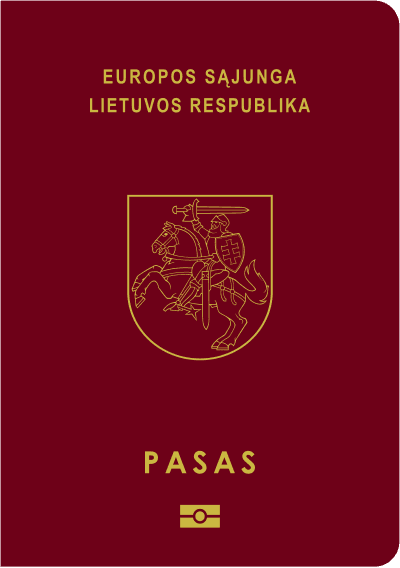
Applications go to the Migration Department, through a Lithuanian embassy or consulate if you live abroad. Once citizenship is restored, you can apply for a Lithuanian passport.
Documents and the Migration Department
Restoration applications go to the Migration Department, directly or through a Lithuanian embassy. You'll need proof that your ancestor was a Lithuanian citizen before 15 June 1940 — an interwar Lithuanian passport, an internal passport record, a military record, or a certificate from the Lithuanian Central State Archives — plus birth and marriage records linking each generation, apostilled and translated into Lithuanian.
Two archive searches settle most cases: the Lithuanian Central State Archives (for interwar passports and citizenship records) and the Lithuanian State Historical Archives (for church books). If your ancestor naturalised elsewhere before 15 June 1940, they lost Lithuanian citizenship then — and the line fails.
Sources: Migration Department of Lithuania · e-seimas — Law on Citizenship of Lithuania
Lithuanian citizenship by descent requirements
- A parent, grandparent or great-grandparent held Lithuanian citizenship before 15 June 1940
- Documented lineage from that ancestor to you
- To keep your other citizenship: the ancestor left Lithuania between 1918 and 11 March 1990 and did not relocate willingly to the USSR
- No Lithuanian language test for restoration
Documents for a Lithuanian claim
- 1Your birth certificate
- 2Birth and marriage certificates for each generation to Lithuanian ancestor
- 3Lithuanian ancestor's birth certificate or citizenship proof
- 4Evidence of departure from Lithuania
- 5Historical documents showing ancestor's pre-1940 citizenship
- 6Your valid passport or ID
- 7All documents need apostilles and Lithuanian translations
Lithuanian processing times
Citizenship restoration typically takes 6-12 months after submission of a complete application. Document gathering from Lithuanian archives may add considerable time to preparation.
Where Lithuanian claims go wrong
- Claiming through a great-great-grandparent — outside the law
- No proof the ancestor held Lithuanian citizenship before 15 June 1940 (as opposed to being born in the Russian Empire before 1918) — or an ancestor who naturalized abroad before 15 June 1940, which ended their Lithuanian citizenship
- An ancestor who moved willingly to the USSR, which removes the right to keep dual citizenship
- Name spellings that differ across Lithuanian, Polish, Russian and English records
- Assuming the 2024 dual-citizenship referendum changed the rules — it failed
Official Lithuanian government sources
Lithuanian citizenship FAQ
Q1Can I claim through a great-grandparent?
Yes. Restoration covers children, grandchildren and great-grandchildren of people who held Lithuanian citizenship before 15 June 1940. Great-great-grandchildren are outside the law.
Q2Can I keep my US citizenship?
Yes, if your ancestor left Lithuania between 1918 and 11 March 1990 and did not relocate willingly to the USSR. Otherwise restoration requires renouncing your other citizenship.
Q3Do I need to speak Lithuanian?
No. There is no language test for restoration of citizenship.
Q4Did the 2024 referendum change dual citizenship?
No. The May 2024 referendum on wider dual citizenship failed to reach the required turnout, so the existing rules still apply.
Q5Does Lithuania require a language test for restoration?
No. Restoration of citizenship has no language or residence requirement.
Q6Can I keep my US citizenship?
Yes, if you or your ancestor left Lithuania before 11 March 1990 (or were exiled or deported) and you acquired the other citizenship — the main exception in Lithuania's otherwise strict rules.
Lithuanian nationality law
Lithuanian citizenship is governed by the Law on Citizenship of the Republic of Lithuania (No. XI-1196, in force since 2011, as amended in 2016). It lets people who held Lithuanian citizenship before 15 June 1940, and their children, grandchildren and great-grandchildren, have it restored; those whose family left Lithuania before 11 March 1990 (other than repatriates) may keep another citizenship.
Dual citizenship in Lithuania
Lithuania imposes one of the stricter dual-citizenship regimes in the EU. The general rule is that Lithuanians who voluntarily acquire another nationality lose Lithuanian citizenship. Exceptions apply to people who left Lithuania before 11 March 1990 (the restoration-of-independence date) and their descendants — they may restore Lithuanian citizenship while keeping another nationality. Repatriates (for example people resettled to Germany in 1941 or to Poland after the war) and their descendants are excluded from this exception.
Lithuanian application costs
Citizenship restoration application fee: €29. Certified translations per document: €30–€70. Apostilles: €15–€40 per document. Lithuanian Archives research fees (if ordering records remotely): €15–€50 per record. Total preparation costs for a typical claim: €400–€1,000.
Compare across countries: dual citizenship everywhere, citizenship through grandparents and through great-grandparents.