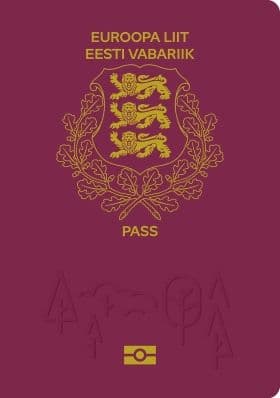
Who qualifies for Estonian citizenship by descent
Estonia has two routes. If a parent was an Estonian citizen when you were born, you are an Estonian citizen by birth. Further back, descendants of people who held Estonian citizenship before the Soviet occupation of 16 June 1940 are generally treated as citizens by birth too, provided each link in the chain is documented; there is no language or residence test for this. Dual citizenship is officially not allowed, but Article 8 of the Constitution says no one can be deprived of citizenship acquired by birth, so citizens by birth who also hold another nationality keep both in practice. That position is politically contested and could change.
Boarding pass · free tool
No sign-up · Private
Estonia eligibility checker
Answer a few questions about your Estonia ancestry. Takes under 2 minutes.
Country
Your answers are processed in your browser — we don’t store them or send them anywhere, including to analytics. The site itself uses analytics and, with your consent, ads. Privacy policy
Citizenship by birth reaches back to 1940
A person whose parent was an Estonian citizen at their birth is an Estonian citizen by birth. Estonia's restored-state approach also treats descendants of people who held citizenship before the Soviet occupation of 16 June 1940 as citizens by birth, so grandchildren and great-grandchildren can have their citizenship confirmed if every link in the chain is documented. Unlike naturalisation, this needs no Estonian language exam and no residence.
The key evidence is the ancestor's pre-1940 citizenship: an interwar Estonian passport, population register entries, or records from the National Archives of Estonia, which has digitised much of the relevant material.
The dual-citizenship question
On paper, Estonia does not allow dual citizenship. But Article 8 of the Constitution says no one may be deprived of Estonian citizenship acquired by birth, and in practice Estonians by birth who hold another nationality keep both. That includes descendants of pre-1940 citizens confirming their citizenship. The position is politically contested and could change. Check the latest guidance from the Police and Border Guard Board before you apply.
Documents and process
You need birth and marriage records linking each generation to the ancestor and proof of the ancestor's pre-1940 citizenship. Foreign documents need apostilles and certified Estonian translations. Applications are handled by the Police and Border Guard Board (PPA), through an Estonian embassy if you live abroad.
Proving the 1940 link: where the records are
Everything turns on showing that your ancestor was an Estonian citizen on 16 June 1940. The strongest evidence is an interwar Estonian passport or citizenship certificate. Without one, the National Archives of Estonia (Rahvusarhiiv) holds interwar population registers, passport-issuing records and church books, much of it searchable online. Records of people who fled in 1944 often surface in displaced-persons files.
Remember the interwar rule: an Estonian who naturalised in another country before 16 June 1940 lost Estonian citizenship, so wasn't a citizen on that date. Emigrants who left before independence (24 February 1918) and never held Estonian documents usually can't anchor a claim.
Applying from abroad
Descendants abroad don't apply for 'citizenship' as such: they apply for their first Estonian identity document, and the Police and Border Guard Board (PPA) establishes citizenship in the process. Book an appointment at an Estonian embassy, bring the linking birth and marriage records (apostilled, with certified Estonian translations) and the evidence of your ancestor's pre-1940 citizenship. Fingerprints are taken at the appointment.
Sources: Police and Border Guard Board — Estonian passport for an adult · ERR News — Estonian citizenship explained in detail
Estonian citizenship by descent requirements
- A parent was Estonian at your birth, OR an ancestor held Estonian citizenship before 16 June 1940
- Documented chain from that ancestor to you
- No language or residence test for citizenship by birth
- Understand the dual-citizenship position before applying
Documents for an Estonian claim
- 1Birth certificates for each generation in the lineage
- 2Marriage certificates linking each generation
- 3Evidence of ancestor's pre-1940 Estonian citizenship (state registers, documents from National Archives of Estonia)
- 4Death certificates where applicable
- 5Valid passport or ID of the applicant
- 6All foreign documents must be apostilled and translated into Estonian
Estonian processing times
Applications submitted through Estonian consulates or the Police and Border Guard Board typically take 6-12 months. Gathering historical records from the National Archives of Estonia can add significant time to the preparation phase.
Where Estonian claims go wrong
- No proof the ancestor was an Estonian citizen on 16 June 1940 — note that an ancestor who naturalized in another country before then had already lost Estonian citizenship
- Confusing citizenship by birth with naturalisation, which does require Estonian and residence
- Assuming dual citizenship is formally allowed — it is tolerated for citizens by birth, not written into the law
- Name spellings that differ across Estonian, German and Russian records
Official Estonian government sources
Estonian citizenship FAQ
Q1Can I claim Estonian citizenship through a grandparent or great-grandparent?
Generally yes, if they held Estonian citizenship before 16 June 1940 and you can document each generation. Descendants of pre-1940 citizens are treated as citizens by birth, without a language test.
Q2Can I keep my other citizenship?
In practice, yes for citizens by birth: the Constitution protects citizenship acquired by birth from being taken away, although Estonian law officially prohibits dual citizenship. The question is politically contested.
Q3Do I need to speak Estonian?
Not to have citizenship by birth confirmed. The language exam applies to naturalisation.
Q4My grandfather left Estonia in 1944 as a refugee. Do I qualify?
Very likely, if he was an Estonian citizen on 16 June 1940 and didn't naturalise elsewhere before that date. His descendants are citizens by birth; apply for your first Estonian document through an embassy.
Q5My ancestor emigrated in 1905. Does that count?
Usually not: Estonia didn't exist as a state until 1918, so an emigrant who never held Estonian citizenship can't anchor a claim.
Estonian nationality law
Estonian citizenship is governed by the Citizenship Act (Kodakondsuse seadus, 1995, as amended). A child of an Estonian citizen is Estonian by birth. Under the principle of legal continuity, people who were citizens on 16 June 1940 — under the 1938 Citizenship Act — and their descendants are treated as Estonian citizens by birth. Article 8 of the 1992 Constitution protects citizenship acquired by birth from being taken away.
Dual citizenship in Estonia
Estonian law officially prohibits dual citizenship, but Article 8 of the Constitution protects citizenship acquired by birth from being taken away. In practice, Estonians by birth — including descendants of pre-1940 citizens — who also hold another nationality keep both. The issue is politically contested and could change.
Estonian application costs
Police and Border Guard Board application fee: €10–€25 (nominal). National Archives of Estonia research and document requests: €3–€15 per record. Apostilles in your home country: €15–€40 per document. Certified translations into Estonian: €60–€120 per document. Total preparation: €400–€900.
Compare across countries: dual citizenship everywhere, citizenship through grandparents and through great-grandparents.